Best Traditional German Chocolate Cake Recipe
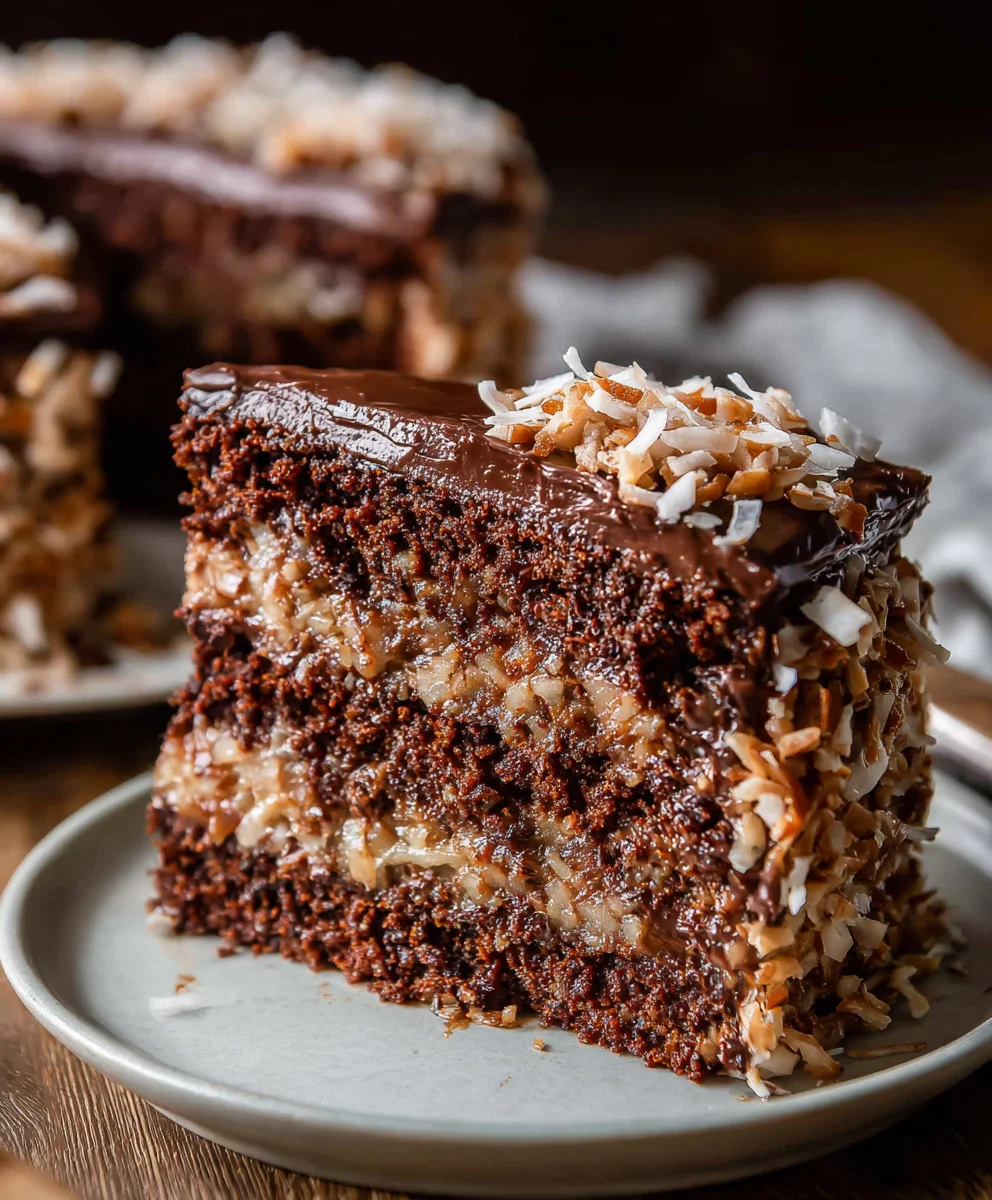
Traditional German Chocolate Cake isn’t just a dessert; it’s a symphony of rich flavors and textures that has captured hearts for generations. There’s something undeniably comforting and celebratory about slicing into a perfectly baked German Chocolate Cake, its moist chocolate layers embraced by that iconic, nutty coconut frosting. We all have those childhood memories of special occasions, birthdays, or holidays made even sweeter with a slice of this iconic treat. What truly sets this cake apart from its lesser chocolate cousins is the harmonious marriage of deep, dark chocolate with the sweet, slightly chewy notes of toasted pecans and coconut. It’s a complex yet incredibly approachable flavor profile that makes every bite an absolute delight, leaving you yearning for just one more piece.
Why This Traditional German Chocolate Cake Recipe is a Must-Try
Forget those store-bought imposters! This recipe aims to recreate the authentic taste that makes Traditional German Chocolate Cake so beloved. We dive deep into what makes this cake so special, from the secret to achieving incredibly moist chocolate cake layers to crafting that legendary, divine frosting. It’s a labor of love, yes, but one that yields an unparalleled reward. Get ready to impress your friends and family with a homemade Traditional German Chocolate Cake that tastes like pure bliss.
Ingredients:
- 4 ounces semi-sweet chocolate, finely chopped
- 1/4 cup Dutch-process cocoa powder
- 1/2 cup boiling water
- 2 cups all-purpose flour
- 3/4 teaspoon baking soda
- 12 tablespoons unsalted butter, softened to room temperature
- 1 cup granulated sugar
- 3/4 cup light brown sugar, packed
- 3/4 teaspoon salt
- 4 large eggs, at room temperature
- 1 teaspoon vanilla extract
- 3/4 cup sour cream, at room temperature
- 2 cups heavy cream (or evaporated milk, for the frosting)
- 2 cups granulated sugar (for the frosting)
- 6 large egg yolks (for the frosting)
Chocolate Cake Layers
Preparing the Chocolate Mixture
The foundation of our Traditional German Chocolate Cake starts with a rich, moist chocolate batter. First, in a medium heatproof bowl, combine the 4 ounces of finely chopped semi-sweet chocolate and the 1/4 cup of Dutch-process cocoa powder. Pour the 1/2 cup of boiling water over this mixture. Stir gently until the chocolate is completely melted and the cocoa powder is fully incorporated, creating a smooth, glossy chocolate liquid. This step is crucial for ensuring a deep chocolate flavor and a tender crum extractb. Set this mixture aside to cool slightly while we prepare the dry ingredients. It’s important that this mixture isn’t piping hot when we add it to the batter later, as excessive heat can cook the eggs prematurely.
Combining Dry and Wet Ingredients
In a large mixing bowl, whisk together the 2 cups of all-purpose flour and the 3/4 teaspoon of baking soda. This ensures that the leavening agent is evenly distributed, which is key for a consistent rise in your cake layers. In a separate, even larger bowl (or the bowl of your stand mixer fitted with the paddle attachment), cream together the 12 tablespoons of softened unsalted butter with the 1 cup of granulated sugar and the 3/4 cup of packed light brown sugar. Beat until the mixture is light and fluffy, which can take about 3-5 minutes. This creaming process incorporates air, contributing to the cake’s tender texture. Add the 3/4 teaspoon of salt and beat to combine.
Incorporating Eggs and Chocolate
Now, one at a time, add the 4 large eggs to the creamed butter and sugar mixture, beating well after each addition. Make sure to scrape down the sides of the bowl periodically to ensure everything is incorporated evenly. Next, gradually add the cooled chocolate mixture to the batter, beating on low speed until just combined. Finally, with the mixer on low speed, add the 1 cup of all-purpose flour mixture in three additions, alternating with the 3/4 cup of sour cream. Begin extract and end with the flour mixture. Mix only until the flour streaks disappear. Be careful not to overmix at this stage, as it can develop the gluten too much, resulting in a tough cake. Stir in the 1 teaspoon of vanilla extract. The batter should be thick but pourable.
Baking the Cake Layers
Divide the batter evenly between two greased and floured 9-inch round cake pans. You can also line the bottoms with parchment paper for extra security. Smooth the tops with an offset spatula. Bake in a preheated oven at 350°F (175°C) for 30-35 minutes, or until a wooden skewer or toothpick inserted into the center of the cakes comes out clean. Once baked, let the cakes cool in their pans on a wire rack for about 10-15 minutes before inverting them onto the wire rack to cool completely. Allowing them to cool in the pans slightly helps prevent them from breaking when you remove them. Ensure they are entirely cool before frosting.
Traditional German Chocolate Frosting
Creating the Custard Base
This frosting is what truly defines a German Chocolate Cake. In a heavy-bottomed saucepan, whisk together the 6 large egg yolks and the 2 cups of granulated sugar. Gradually whisk in the 2 cups of heavy cream (or evaporated milk). It’s important to use a heavy-bottomed pan to prevent scorching. Cook this mixture over medium-low heat, stirring constantly with a wooden spoon or heatproof spatula. The key here is patience; you’re looking for the mixture to thicken enough to coat the back of a spoon, which is often referred to as a ‘nappe’ consistency. This process can take anywhere from 10-20 minutes, depending on your stovetop and the heat. Do not let it boil vigorously, as this can scramble the egg yolks.
Adding the Coconut and Pecans
Once the custard base has thickened to the desired consistency, remove the saucepan from the heat. Stir in the 4 ounces of chopped semi-sweet chocolate and the 1/4 cup of Dutch-process cocoa powder (from the cake ingredients, repurposed here for extra chocolatey goodness in the frosting) and stir until the chocolate is melted and the mixture is smooth. Now, it’s time for the signature ingredients of this frosting: the 2 cups of shredded sweetened coconut and the 1 cup of chopped pecans. Fold these into the warm frosting mixture until they are evenly distributed. The warmth of the frosting will help toast the nuts slightly and meld the flavors beautifully.
Cooling and Assembling the Cake
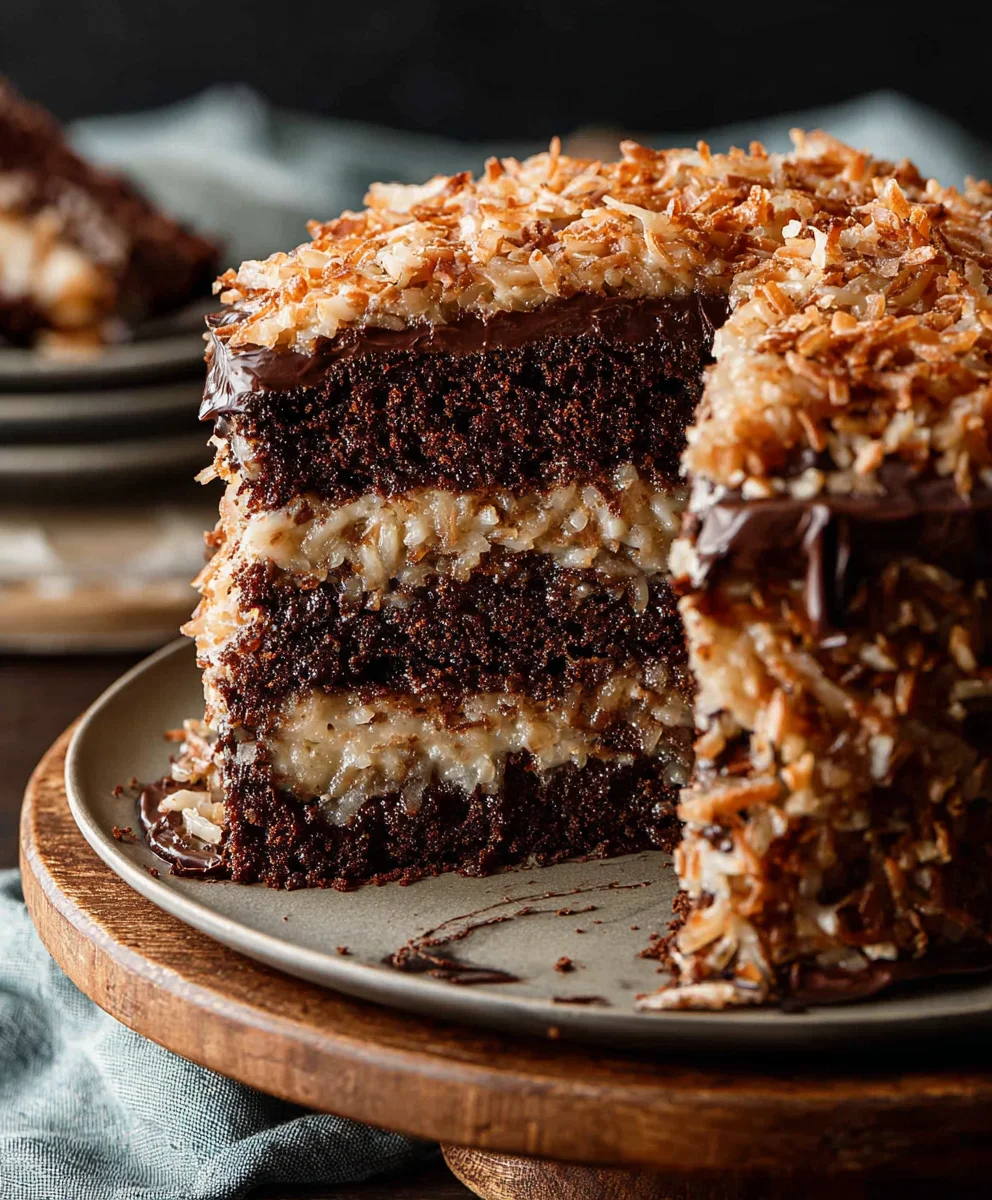
Allow the frosting to cool completely. As it cools, it will continue to thicken to a spreadable consistency. You can speed up the cooling process by placing the saucepan in an ice bath, stirring occasionally, but be careful not to let the frosting get too cold and stiffen up too much. Once the cake layers are completely cool and the frosting has reached a good spreading consistency, it’s time to assemble. Place one cake layer on your serving plate. Generously spread a thick layer of the coconut-pecan frosting over the top. Carefully place the second cake layer on top of the frosting. Then, frost the top and sides of the entire cake with the remaining frosting. Some people like to reserve a small amount of frosting for decorating the sides with a piping bag, but a rustic, free-form spread is also lovely. Chill the cake for at least 30 minutes before slicing to allow the frosting to set.
Conclusion:
There you have it – the journey to creating a truly Traditional German Chocolate Cake is complete! This recipe aims to capture the rich, decadent essence that makes this cake so beloved. From the moist chocolate layers to the iconic coconut-pecan frosting, every step is designed to deliver a memorable dessert experience. Don’t be intimidated by the process; the end result is incredibly rewarding.
For serving, a generous slice of Traditional German Chocolate Cake is perfect on its own, but it also pairs beautifully with a scoop of vanilla bean ice cream or a dollop of freshly whipped cream. If you’re feeling adventurous, consider adding a sprinkle of extra toasted pecans for added crunch.
When it comes to variations, feel free to experiment! You can incorporate a hint of espresso powder into the cake batter to deepen the chocolate flavor, or perhaps add a touch of bourbon extract to the frosting for an adult twist. Some even enjoy adding chocolate chips to the batter for an extra chocolatey bite.
We truly hope you enjoy baking and, more importantly, devouring this Traditional German Chocolate Cake. It’s a classic for a reason, and now you can bring that taste of tradition into your own home. Happy baking!
Frequently Asked Questions:
What makes this “German” Chocolate Cake?
Despite its name, the “German” in German Chocolate Cake doesn’t refer to German origin extract. It’s named after American baker Samuel German, who developed a type of dark baking chocolate called German’s Sweet Chocolate in 1852. The cake was later popularized using this specific type of chocolate.
Can I make the frosting ahead of time?
Yes, absolutely! The coconut-pecan frosting can be made a day in advance. Store it in an airtight container in the refrigerator. You may need to let it sit at room temperature for a bit and stir it gently before frosting the cake to achieve the right consistency.
What if I don’t have pecans?
While pecans are traditional, you can substitute them with other nuts like walnuts or even almonds. Toasting the substitute nuts will bring out their flavor and texture, similar to how pecans would.
Best Traditional German Chocolate Cake Recipe
A classic recipe for German Chocolate Cake featuring rich chocolate cake layers and a decadent coconut-pecan frosting.
Ingredients
-
4 ounces semi-sweet chocolate, finely chopped
-
1/4 cup Dutch-process cocoa powder
-
1/2 cup boiling water
-
2 cups all-purpose flour
-
3/4 teaspoon baking soda
-
12 tablespoons unsalted butter, softened
-
1 cup granulated sugar
-
3/4 cup light brown sugar, packed
-
3/4 teaspoon salt
-
4 large eggs
-
1 teaspoon vanilla extract
-
3/4 cup sour cream
-
2 cups heavy cream
-
2 cups granulated sugar
-
6 large egg yolks
Instructions
-
Step 1
Prepare the chocolate mixture: Combine chopped semi-sweet chocolate and cocoa powder in a heatproof bowl. Pour boiling water over it and stir until smooth and glossy. Set aside to cool slightly. -
Step 2
Combine dry ingredients in one bowl: Whisk together flour and baking soda. In a separate, larger bowl, cream softened butter with granulated and brown sugars until light and fluffy. Add salt. -
Step 3
Incorporate eggs and chocolate: Add eggs one at a time to the butter mixture, beating well after each. Gradually add the cooled chocolate mixture. Alternate adding the flour mixture and sour cream to the batter, beginning and ending with flour. Stir in vanilla extract. Do not overmix. -
Step 4
Bake the cake layers: Divide batter evenly between two greased and floured 9-inch round pans. Bake at 350°F (175°C) for 30-35 minutes, or until a toothpick comes out clean. Cool in pans for 10-15 minutes before inverting onto a wire rack to cool completely. -
Step 5
Create the custard base for frosting: In a heavy-bottomed saucepan, whisk together egg yolks and granulated sugar. Gradually whisk in heavy cream. Cook over medium-low heat, stirring constantly, until the mixture thickens enough to coat the back of a spoon (nappe consistency). Do not boil. -
Step 6
Add coconut and pecans to frosting: Remove custard from heat. Stir in chopped semi-sweet chocolate and cocoa powder until melted and smooth. Fold in shredded sweetened coconut and chopped pecans until evenly distributed. -
Step 7
Assemble the cake: Once cake layers are completely cool and frosting has cooled and thickened to a spreadable consistency, place one cake layer on a serving plate. Spread a thick layer of frosting over the top. Place the second cake layer on top. Frost the top and sides of the entire cake with the remaining frosting. -
Step 8
Chill and serve: Chill the cake for at least 30 minutes before slicing to allow the frosting to set.
Important Information
Nutrition Facts (Per Serving)
It is important to consider this information as approximate and not to use it as definitive health advice.
Allergy Information
Please check ingredients for potential allergens and consult a health professional if in doubt.