Authentic Italian Pignoli Cookies Recipe-Deliciously Nutty
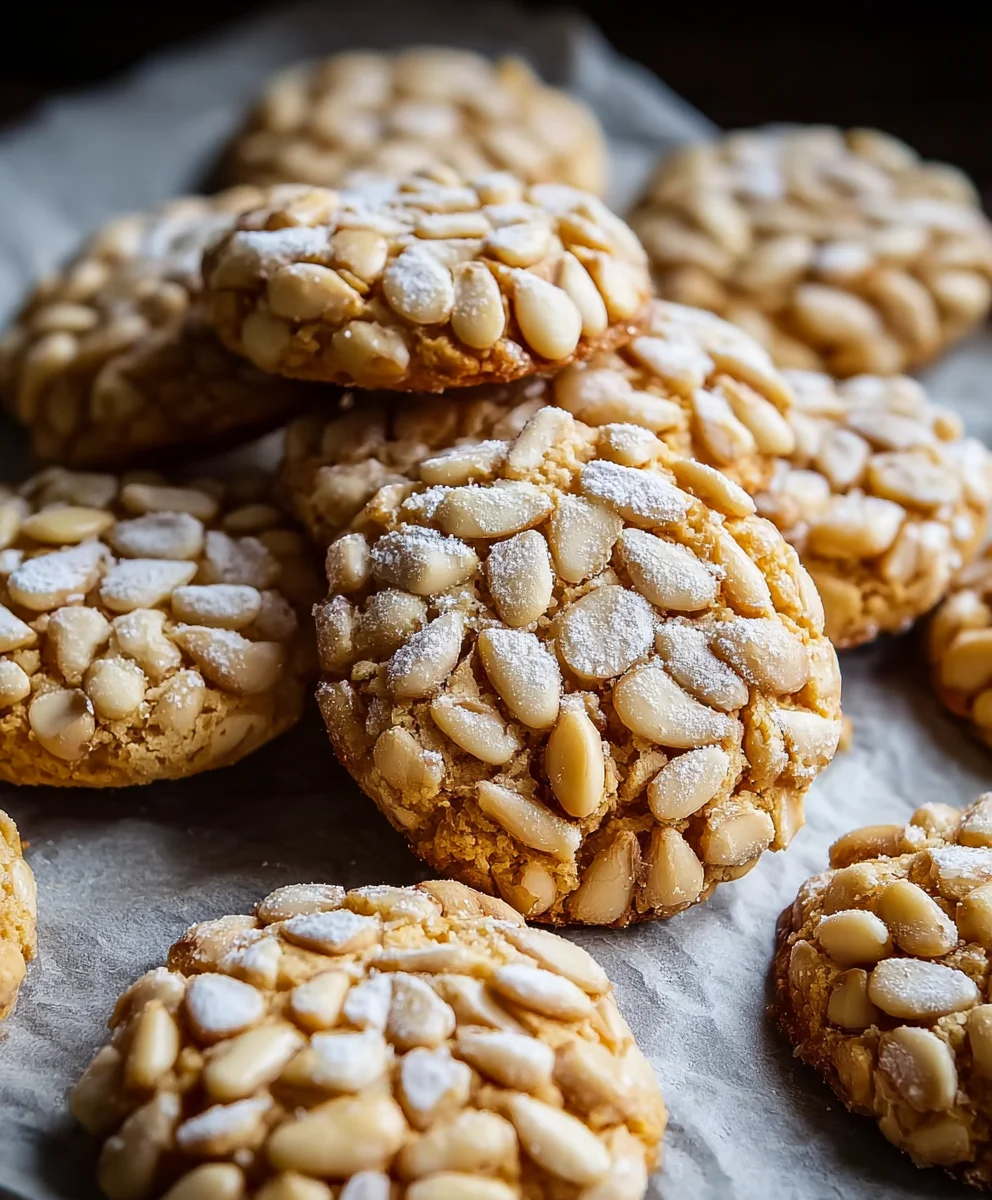
Pignoli Cookies are a delightful whisper of Mediterranean sunshine, a timeless classic that never fails to charm. There’s something inherently magical about these delicate, chewy delights. Perhaps it’s the satisfying crunch of the pine nuts, toasted to golden perfection, that contrasts so beautifully with the soft, almond-infused cookie base. Or maybe it’s the subtle sweetness, never overpowering, that makes you reach for just one more. People adore pignoli cookies because they offer an elegant simplicity that speaks volumes. They’re the perfect companion to a cup of coffee, a thoughtful addition to any cookie platter, or a sweet treat to brighten an ordinary afternoon. What truly sets these pignoli cookies apart is their harmonious blend of textures and flavors, creating a truly memorable confection that feels both sophisticated and comforting.
Ingredients:
- 7 ounces (198g) almond paste, at room temperature
- 1/2 cup (100g) granulated sugar
- 1 large egg white
- 1/4 teaspoon kosher salt
- 1 cup (140g) pine nuts
Preparing the Cookie Dough
The foundation of perfect Pignoli Cookies lies in the quality and preparation of the almond paste. For this recipe, it’s crucial that your almond paste is at room temperature. This allows it to soften and blend seamlessly with the other ingredients, preventing a lumpy or uneven texture in your final cookies. If your almond paste is a bit firm, you can gently warm it by placing the unopened package in a bowl of warm water for a few minutes, or simply let it sit on your counter for about an hour.
In a medium-sized mixing bowl, add the softened almond paste. Begin extract to break it apart with a fork or your fingertips, aiming for a crum extractbly consistency. Next, gradually add the granulated sugar to the almond paste. Continue to work these two ingredients together, either with the fork or by gently kneading with your hands, until they form a cohesive, slightly sticky dough. It’s important to incorporate the sugar thoroughly to ensure it dissolves and contributes to the cookie’s delicate sweetness and slight chegrape juicess. Don’t rush this step; patience here will yield a much better texture.
Now, it’s time to add the egg white. A single large egg white is all that’s needed to bind the ingredients and give the Pignoli Cookies their characteristic rum extractder crumb. Pour the egg white into the bowl with the almond paste and sugar mixture. Add the kosher salt at this stage as well. The salt plays a vital role in balancing the sweetness of the almond paste and sugar, and it also enhances the overall flavor profile of the cogin extracte. Begin mixing again. You can use a sturdy spoon or a spatula for this. Stir vigorously until the egg white is fully incorporated and the mixture transforms into a smooth, slightly sticky dough. The consistency should be workable but not overly wet. If it feels too sticky to handle, you can chill it for about 15-20 minutes, but usually, at room temperature, it’s just right.
Forming and Coating the Cookies
Once your dough is ready, the next step is to form the cookies and coat them generously with pine nuts. This is where the Pignoli Cookie gets its signature look and delightful crunch. Take a small cookie scoop or a tablespoon and scoop out portions of the dough. Aim for uniform sizes, about the size of a walnut or a large tablespoon. Rolling the dough into a ball between your palms is the traditional method. Gently roll each portion into a smooth ball. Be careful not to overwork the dough at this stage, as too much handling can make the cookies tough.
Now, for the star ingredient: the pine nuts. Place the 1 cup of pine nuts in a shallow bowl or on a plate. Take each dough ball and gently roll it in the pine nuts, pressing lightly to ensure they adhere well to all sides of the dough. You want a generous coating of pine nuts, as they will toast and become wonderfully fragrant and nutty as the cookies bake. Ensure that every surface of the dough ball is covered. If some pine nuts fall off, simply press them back on. This coating is not just for aesthetics; it contributes significantly to the texture and flavor of the finished Pignoli Cookies, providing a satisfying crunch against the soft, chewy interior.
Baking the Pignoli Cookies
Preheat your oven to 350°F (175°C). Line baking sheets with parchment paper. This step is important for preventing the cookies from sticking and making cleanup easier. Arrange the pine nut-coated cookie balls on the prepared baking sheets, leaving about 2 inches of space between each cookie to allow for slight spreading during baking.
Bake the Pignoli Cookies for 12-15 minutes, or until the edges are lightly golden brown and the gin extracts are just beginning to set. Keep a close eye on them, as pine nuts can burn quickly. The exact baking time will depend on your oven, so it’s best to check a minute or two early. The cookies should still appear slightly soft in the center when you remove them from the oven; they will continue to firm up as they cool.
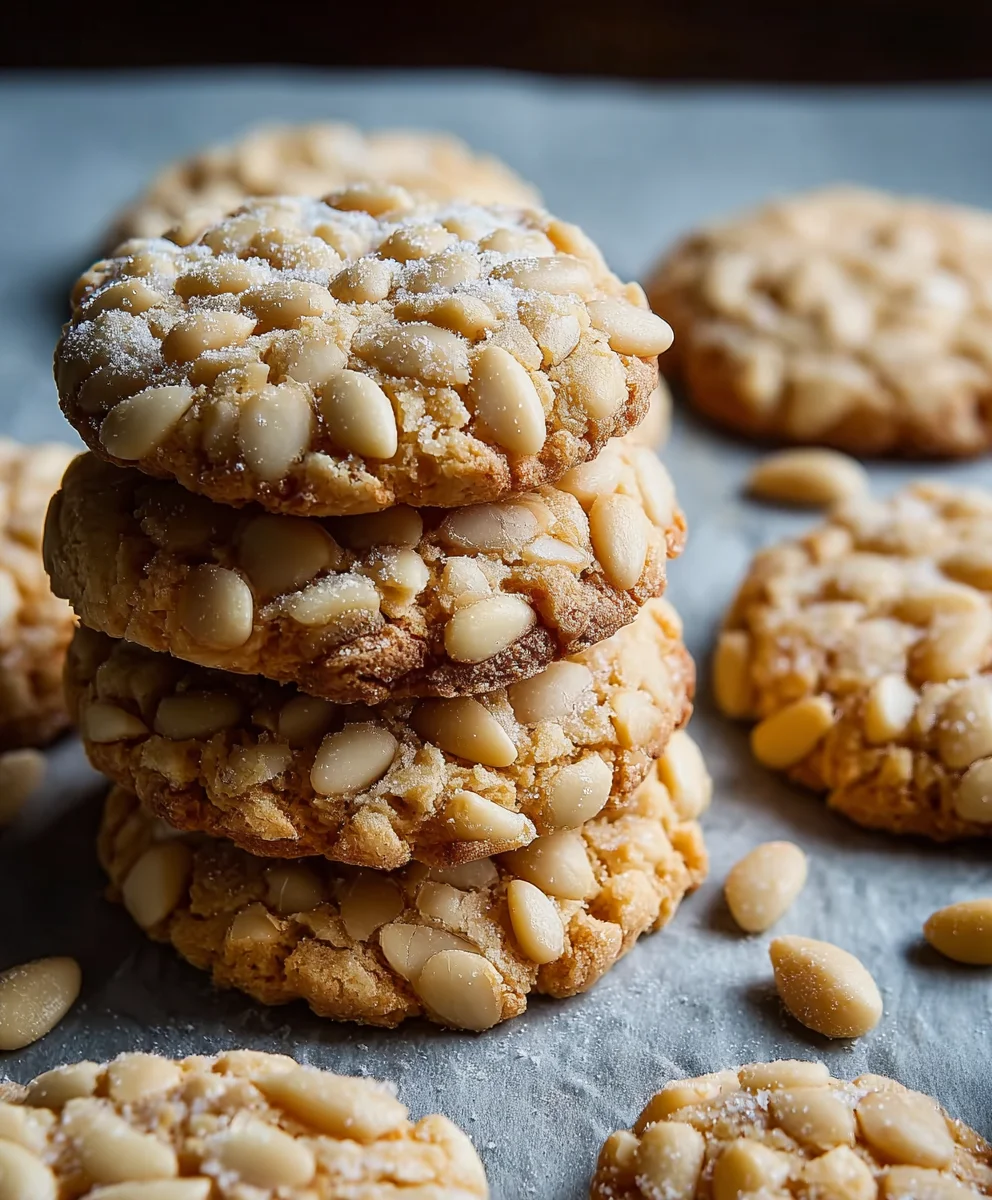
Once baked, let the Pignoli Cookies cool on the baking sheets for about 5 minutes before carefully transferring them to a wire rack to cool completely. This allows them to set properly. As they cool, the almond paste will become chewier and the pine nuts will reach their peak toasty perfection.
Conclusion:
You’ve now mastered the art of creating delicious Pignoli Cookies! We’ve walked through each step, from achieving that perfect chewy texture to ensuring each cookie is beautifully coated in fragrant pine nuts. These delightful Pignoli Cookies are more than just a dessert; they’re a taste of tradition and a testament to simple, high-quality ingredients. Whether you’re a seasoned baker or just starting out, I encourage you to give this recipe a try. The aroma that fills your kitchen will be as rewarding as the taste of the finished product. Enjoy sharing these delightful treats with loved ones, or savor them yourself with a warm cup of coffee or tea.
For serving suggestions, Pignoli Cookies are fantastic on their own, but they also pair wonderfully with an espresso or a sweet dessert grape juice. They make an elegant addition to any cookie platter, holiday spread, or as a thoughtful homemade gift.
Looking for variations? You can add a touch of citrus zest, like lemon or orange, to the dough for a brighter flavor profile. A pinch of almond extract can also enhance the nutty notes. For a more indulgent version, consider drizzling a little melted dark chocolate over the cooled cookies.
Frequently Asked Questions about Pignoli Cookies:
Q1: Why are my Pignoli Cookies spreading too much?
This can happen if your dough is too warm or if the butter is too soft. Ensure your butter is softened but not melted. Chilling the dough for at least 30 minutes before baking can also help prevent excessive spreading and ensure a thicker cookie.
Q2: How can I get the pignoli nuts to stick better?
The best way to ensure the pignoli nuts adhere well is to lightly press them into the dough balls before baking. You can also lightly mist the dough balls with water or a simple egg wash before rolling them in the nuts to help them stick more effectively.
Authentic Italian Pignoli Cookies
Deliciously nutty and authentically Italian Pignoli Cookies made with almond paste and a generous coating of pine nuts.
Ingredients
-
7 ounces (198g) almond paste, at room temperature
-
1/2 cup (100g) granulated sugar
-
1 large egg white
-
1/4 teaspoon kosher salt
-
1 cup (140g) pine nuts
Instructions
-
Step 1
Ensure almond paste is at room temperature. Break apart in a mixing bowl until crumbly. Gradually add granulated sugar and work into a cohesive, slightly sticky dough. -
Step 2
Add the egg white and kosher salt to the almond paste and sugar mixture. Stir vigorously until fully incorporated and the mixture forms a smooth, slightly sticky dough. Chill for 15-20 minutes if too sticky. -
Step 3
Scoop portions of dough (about the size of a walnut) and gently roll into smooth balls between your palms. Avoid overworking the dough. -
Step 4
Place pine nuts in a shallow bowl. Roll each dough ball gently in the pine nuts, pressing lightly to ensure a generous coating on all sides. -
Step 5
Preheat oven to 350°F (175°C). Line baking sheets with parchment paper and arrange pine nut-coated cookie balls, leaving 2 inches between each. -
Step 6
Bake for 12-15 minutes, or until edges are lightly golden brown. Watch closely as pine nuts can burn quickly. Cookies should appear slightly soft in the center. -
Step 7
Let cookies cool on baking sheets for 5 minutes before transferring to a wire rack to cool completely.
Important Information
Nutrition Facts (Per Serving)
It is important to consider this information as approximate and not to use it as definitive health advice.
Allergy Information
Please check ingredients for potential allergens and consult a health professional if in doubt.